
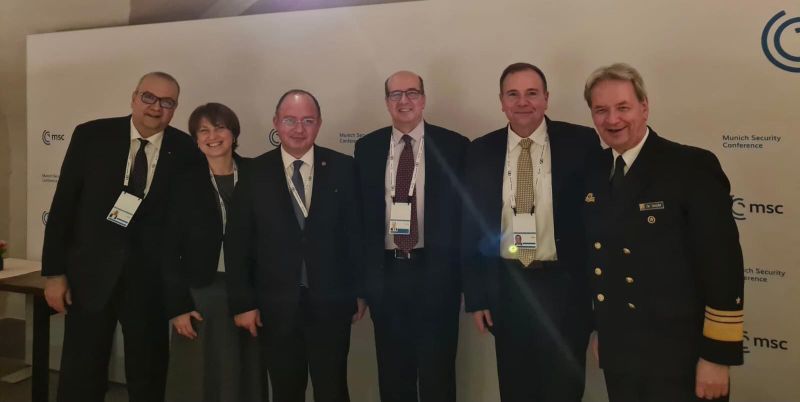
New Strategy Center hosted an event on Saturday, February 19, on the sidelines of the Munich Security Conference (MSC), in partnership with the Center for European Policy Analysis (CEPA) from the United States, an event dedicated to the strategic importance of the Black Sea and the hybrid threats this region faces.
Entitled “Security in the Black Sea Region: From Cyberstorm and Brinkmanship to Border Confrontation,” the debate focused on the many security challenges, from classic to hybrid, analyzing how cyber attacks take place, the influence of cyberattacks, misinformation, the effects of pressures and dependence on a single energy supplier, the destabilizing effect of frozen conflicts in this space. The special guest of the meeting was Ambassador Bogdan Aurescu, Romania’s foreign minister, said the debate was a good opportunity to present Romania’s strategic importance in the region and the steps NATO and the EU are taking to deter the growing number of threats and increase the resilience of states in the region.

The debate was moderated by LTG (Ret) Ben Hodges, former commander of the US Army Europe and Pershing Chair for Strategic Studies CEPA, and the introduction and conclusions were made by Ambassador Sorin Ducaru, director of the EU Satellite Center and honorary president of the Scientific Council of the New Strategy Center. Participants were able to learn more about NSC’s work and projects from George Scutaru, NSC’s CEO.
This is the second time that New Strategy Center organizes in Munich, as the only Romanian partner of the MSC, an event that promotes the strategic relevance of the Black Sea region and the importance of Romania in the area.