
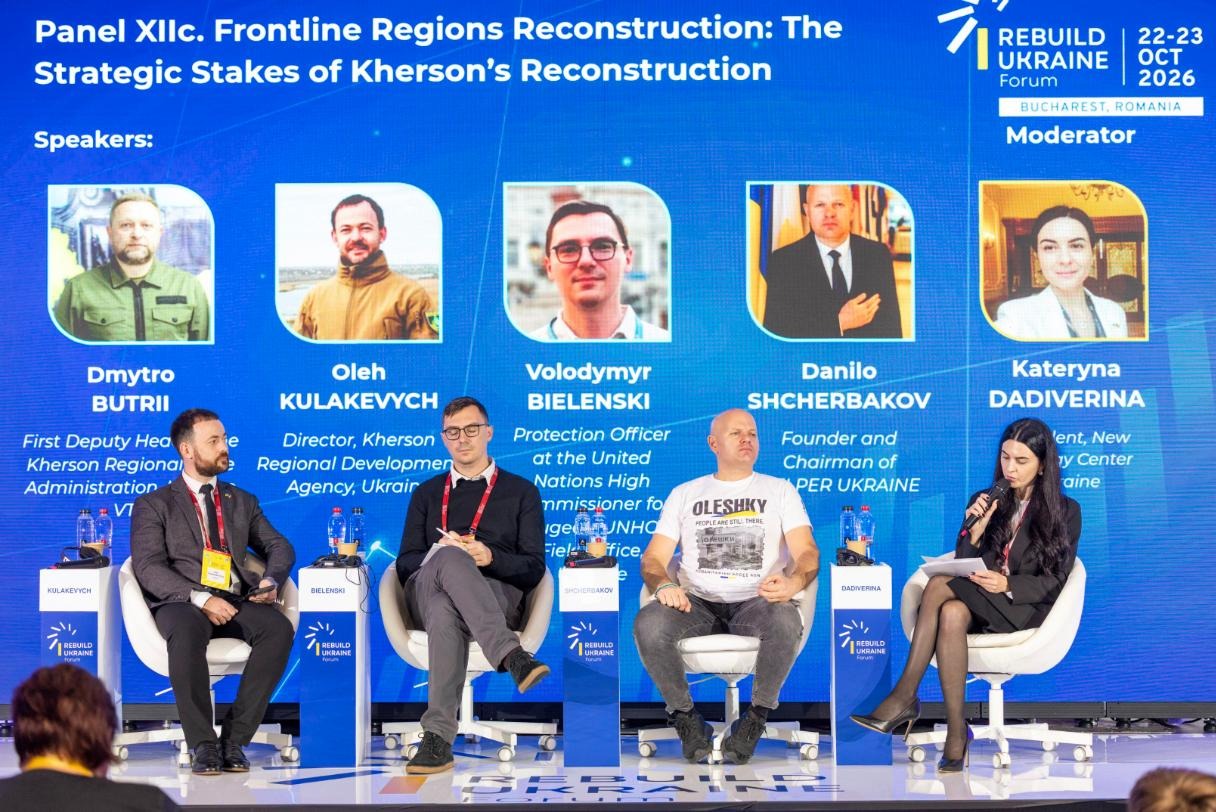
Rebuild Ukraine Forum 2026 / Panel XIIc / 23 October 2026
Moderator
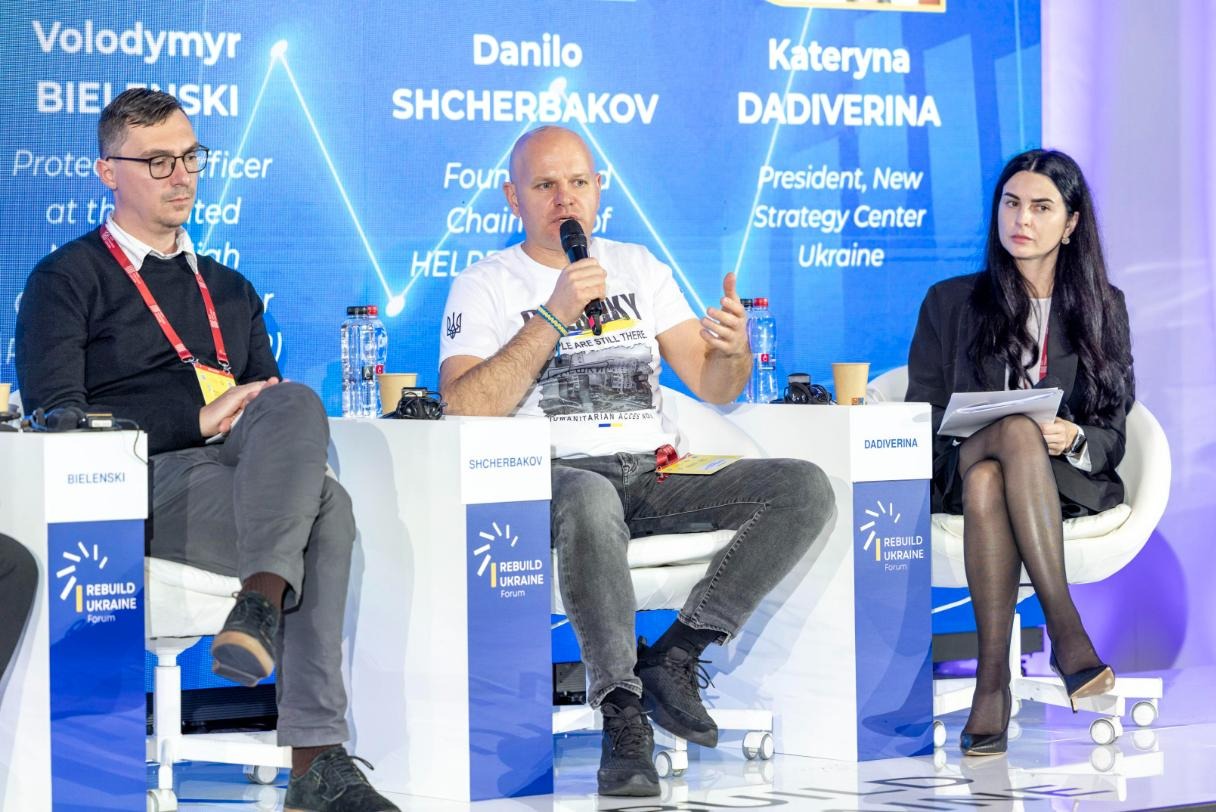
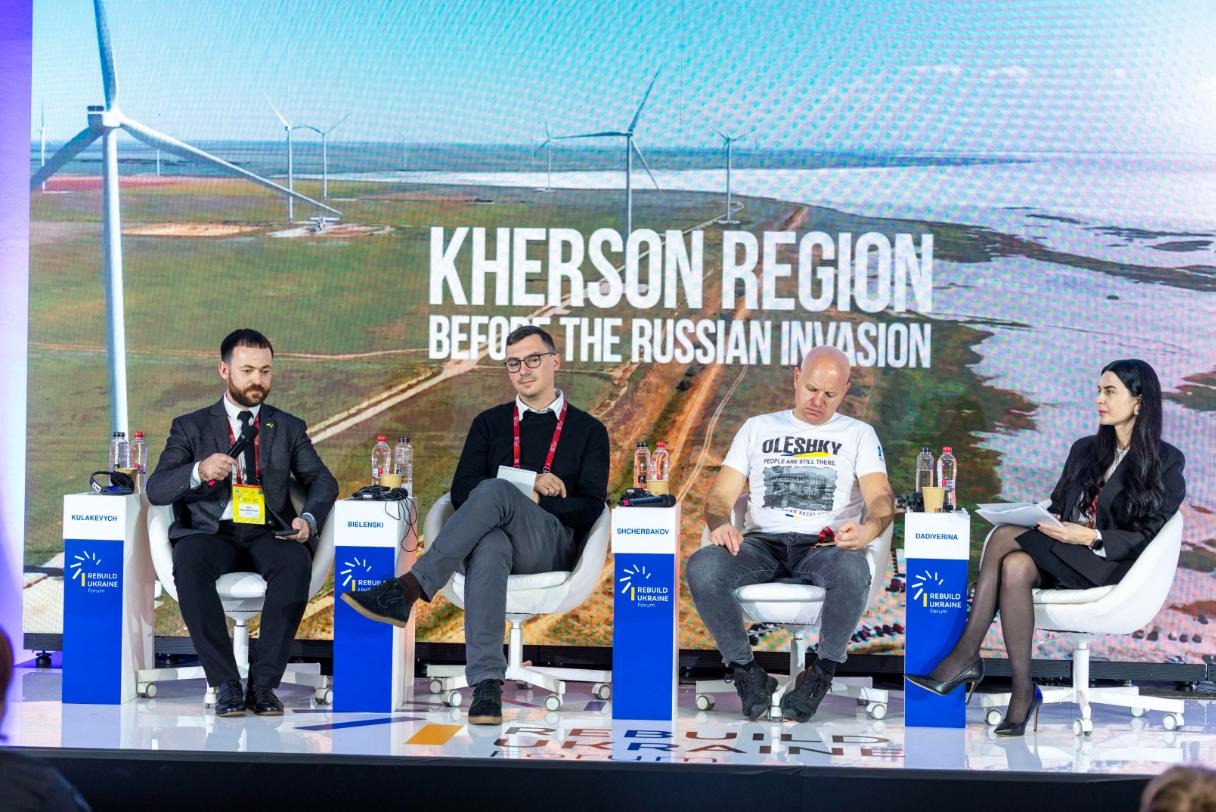
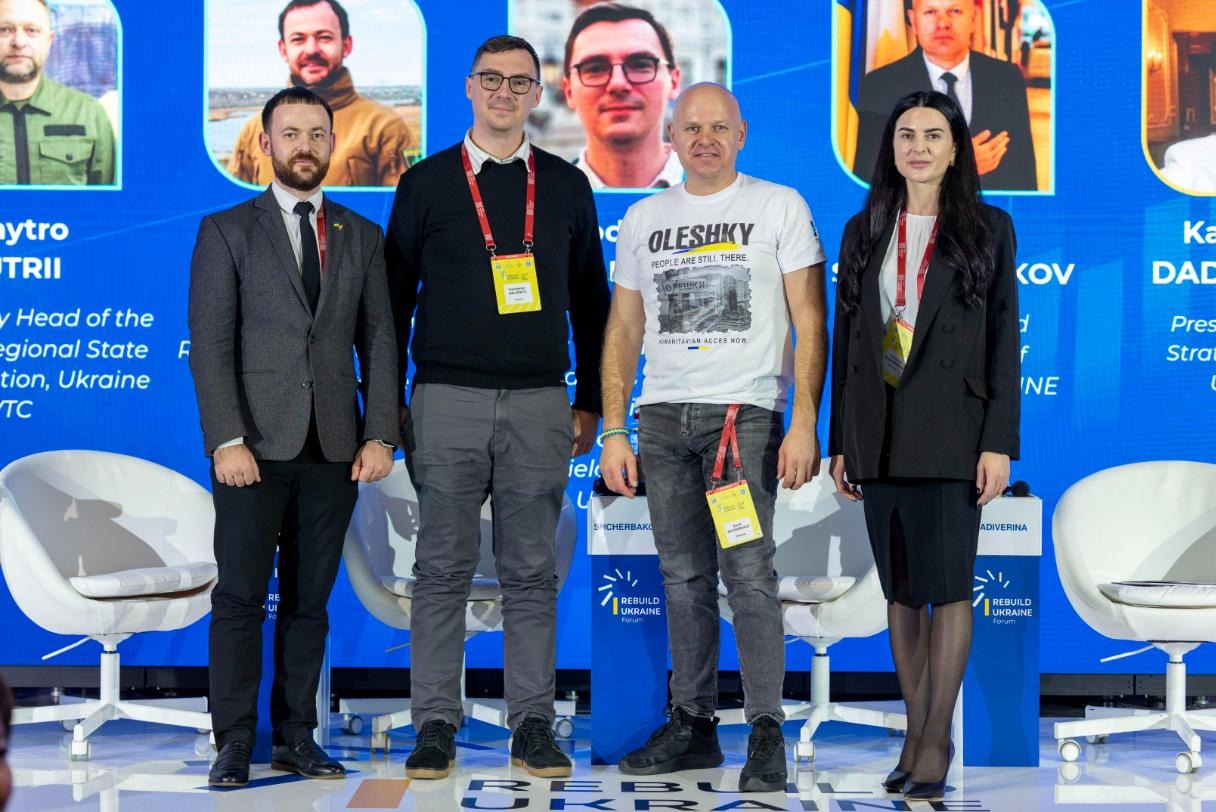
Kateryna Dadiverina
President, New Strategy Center Ukraine
Speaker
Dmytro Butrii
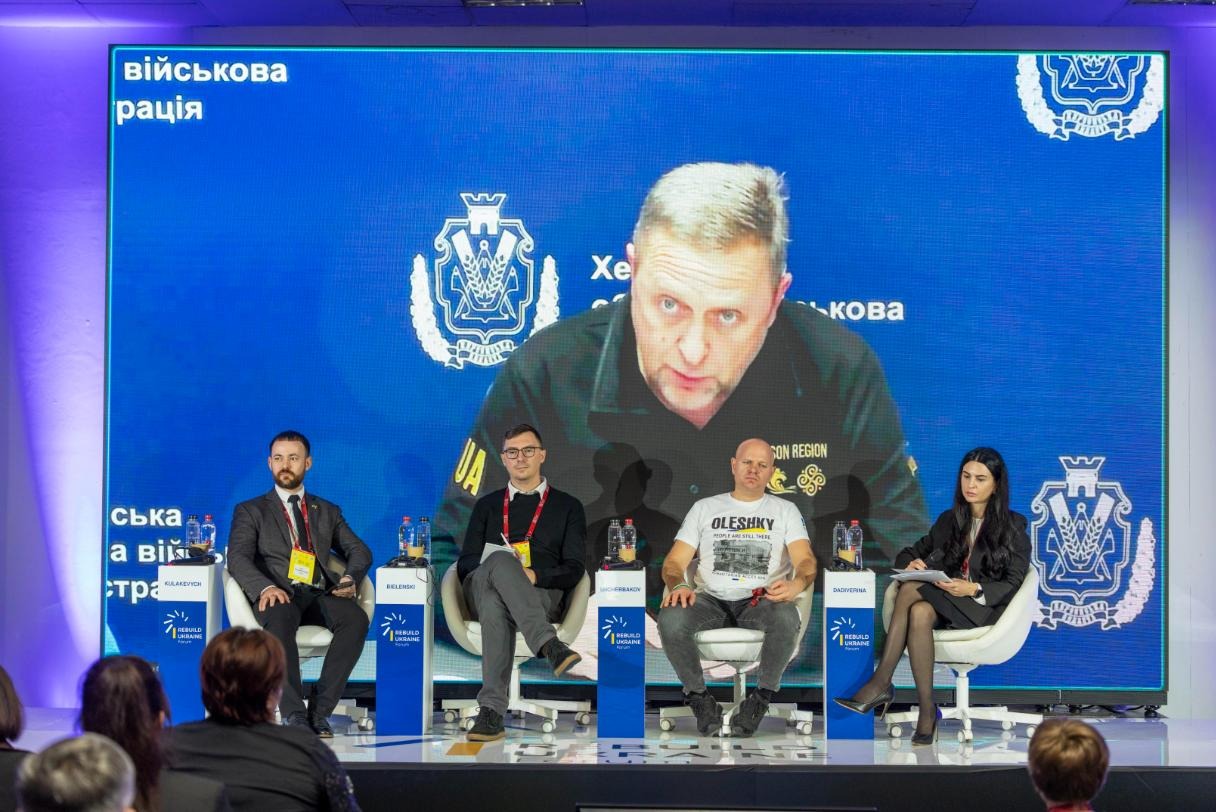
First Deputy Head of the Kherson Regional State Administration, Ukraine (via VTC)
Speaker
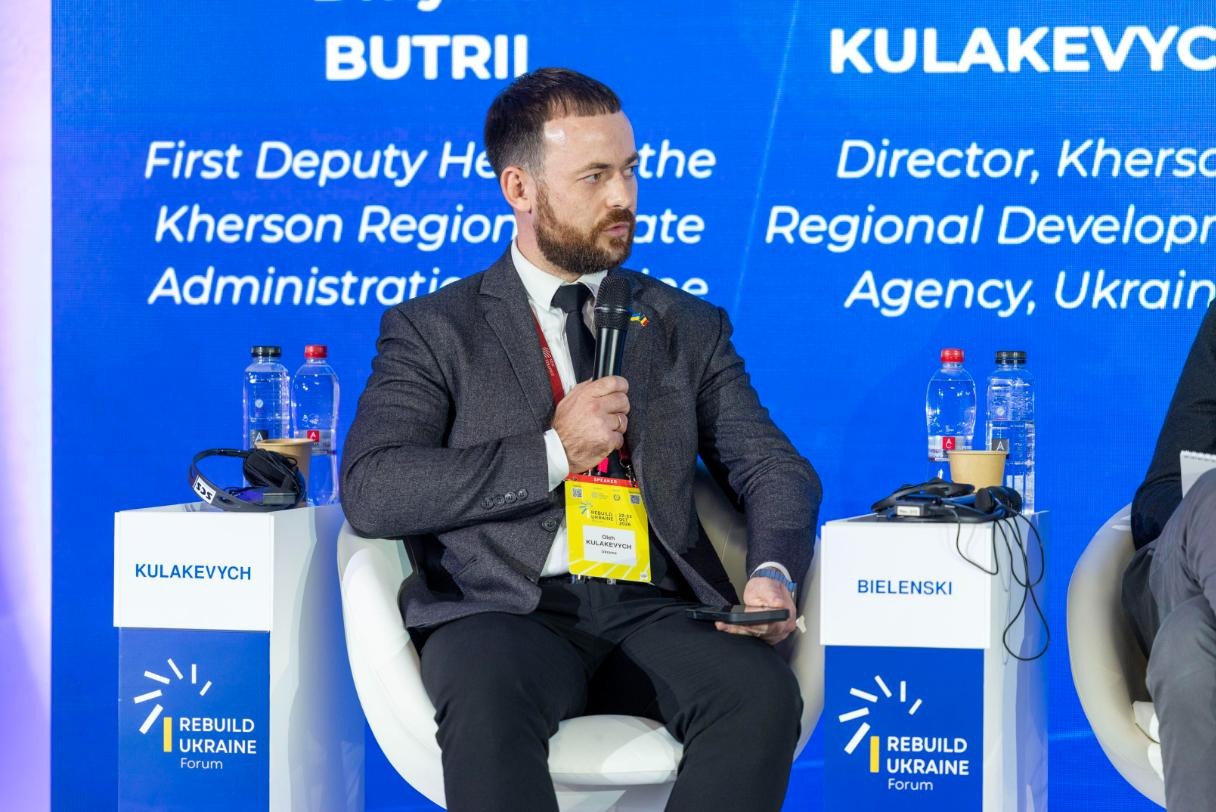
Oleh Kulakevych
Director, Regional Development Agency “Office of European Integration” of the Kherson Region, Ukraine
Speaker
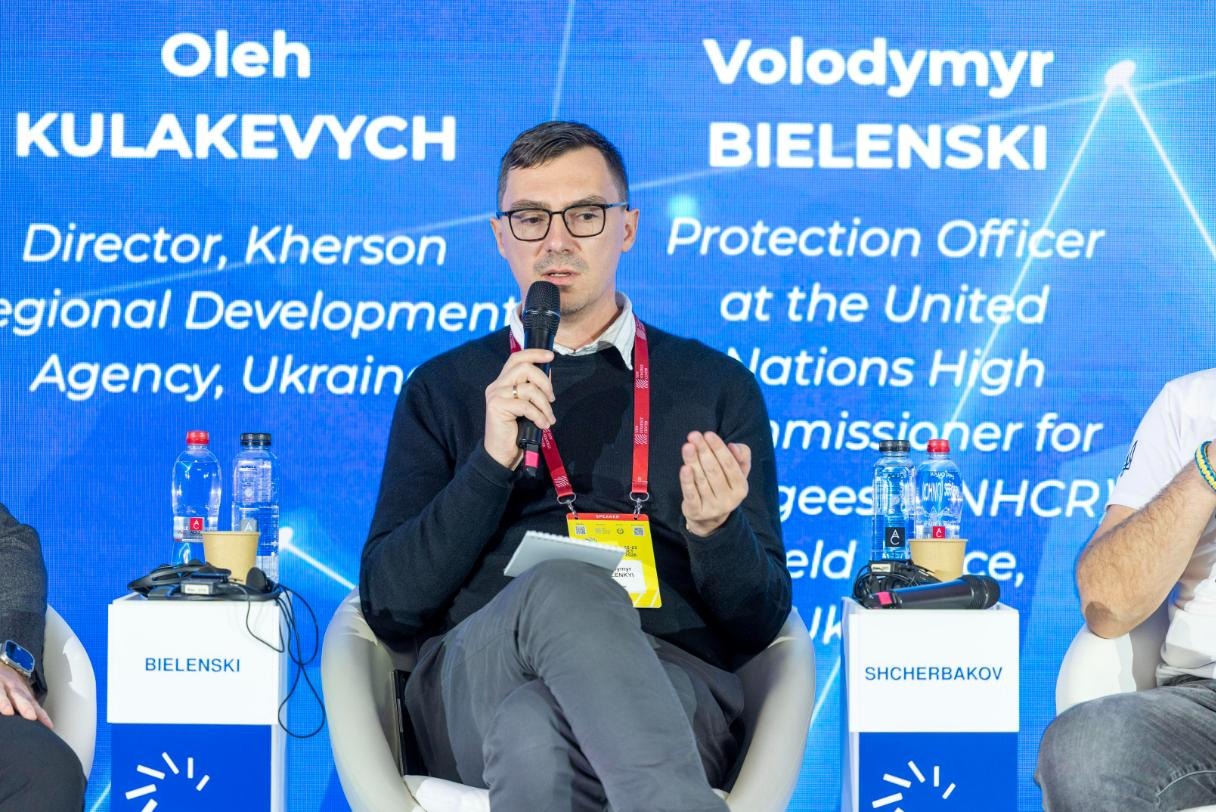
Volodymyr Bielienkyi
Protection Officer, UNHCR, Ukraine
Speaker
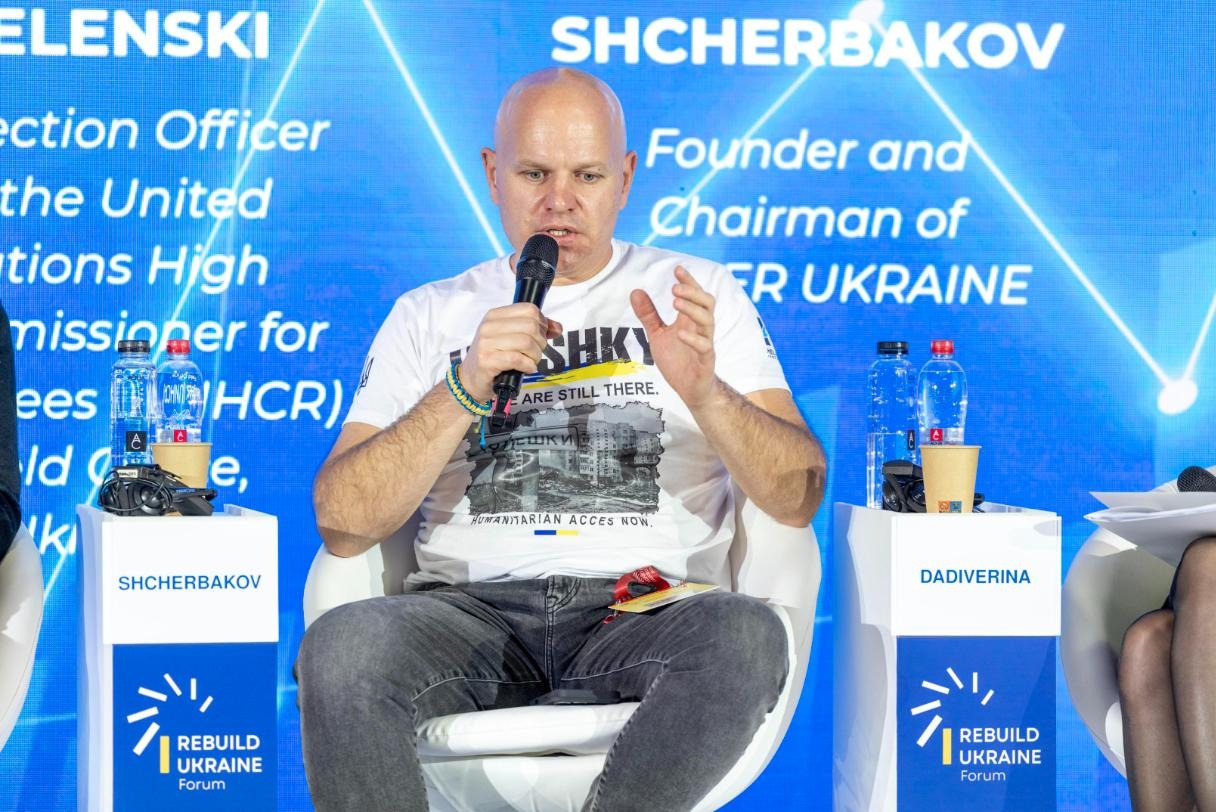
Danilo Shcherbakov
Founder and Chairman, HELPER UKRAINE
Dmytro Butrii and Oleh Kulakevych presented a dramatic picture of the Kherson region, heavily impacted by the Russian occupation and its proximity to the frontline, enduring daily attacks, the destruction of over 40,000 infrastructure sites and the displacement of 400,000 residents, with only 30% of the territory liberated. Faced with these challenges, the current strategy simultaneously targets survival (evacuation, securing basic needs and building civil infrastructure) and long-term planning for the moment of full liberation. Agriculture remains a central pillar but faces major obstacles: although 80% of arable land has been demined and replanted, farmers are frequently attacked, and the destruction of the Kakhovka dam has caused a severe water crisis. Post-war investment priorities include rebuilding critical and irrigation infrastructure, revitalising the agro-industrial sector, restoring logistics networks and relaunching green energy projects.
Regarding the social and humanitarian aspects, Volodymyr Bielienkyi emphasised that physical reconstruction must go hand in hand with the restoration of social and educational services to encourage the return of refugees. A decreasing number of refugees currently in Europe wish to return, given the lack of safety and the destruction of civil infrastructure such as schools and hospitals. Consequently, restoring and supporting human capital, including social workers, is considered a “priceless” investment, fundamental to the region’s future. At the same time, Danilo Shcherbakov highlighted the need for a systemic approach to humanitarian aid and the importance of international awareness campaigns to attract and maintain support from major global brands and international donors, pointing out that the community’s adaptation to the traumas of war represents an immense challenge and an urgent call for continued solidarity.
Watch the full panel English → Română → Українська →