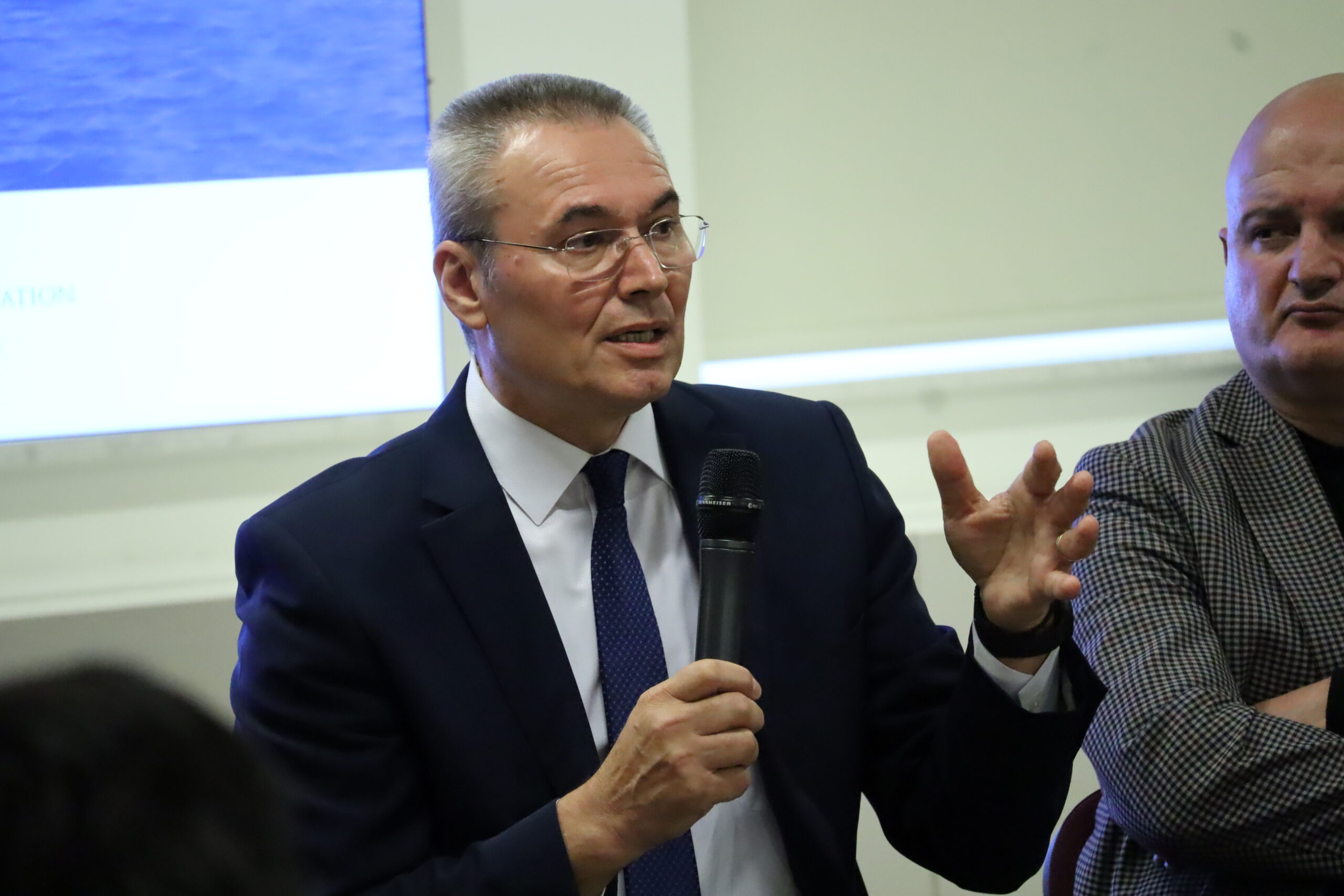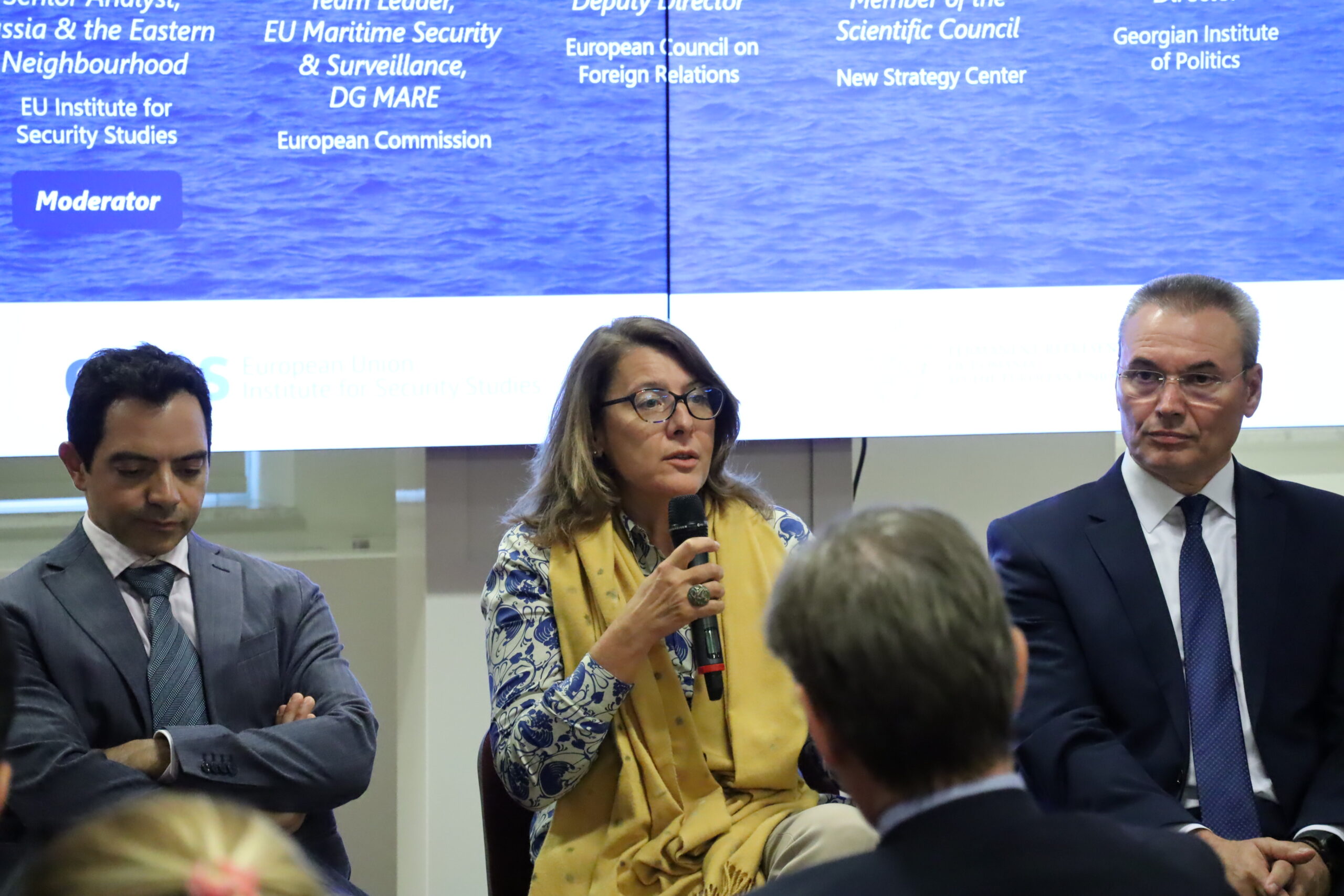
Lieutenant General (ret.) Vasile Toader participated on Thursday, 1 October, in the 2026 Black Sea Security Seminar – Secure Euxeinos, Secure Europe, organised by the European Union Institute for Security Studies (EUISS) in Brussels.
The event brought together EU policymakers and independent experts to collectively discuss the next steps in implementing the EU’s Strategic Approach to the Black Sea region. H.E. Oana Țoiu, Minister of Foreign Affairs of Romania, also participated in the opening session.
The first panel examined, at the strategic level, the place of the region in the new security strategy, cooperation with partner countries – Ukraine, Türkiye, Georgia and the Republic of Moldova – the implications of Russia’s continued destabilising actions across the wider Black Sea region, and the complementarity of EU and NATO efforts. The discussions also linked regional security with future efforts for the reconstruction of Ukraine.
The second panel, held at expert level, addressed practical solutions for strengthening security in the Black Sea region, taking into account the conclusions of the first report on the implementation of the EU’s Strategic Approach.
Lieutenant General (ret.) Vasile Toader emphasised the critical importance of the factor of time: four and a half years after Russia’s invasion of Ukraine, Russia has failed to achieve its strategic objectives and is facing increasingly acute external and internal pressures. At the same time, there are no conclusive signs that Russia is seeking to end the war or agree to a ceasefire in the period ahead. As war fatigue is beginning to manifest itself on all sides, time can no longer be considered an unlimited resource.
The Hub represents an important bilateral initiative that needs to be implemented without delay. It is intended to provide a regional platform for maritime situational awareness, early warning, coordinated protection of critical infrastructure, and enhanced resilience to hybrid threats. The Hub will not constitute a parallel military command structure, nor will it duplicate existing NATO and EU mechanisms; rather, it will connect information, capabilities and authorities that currently operate within separate systems.
The timely implementation of the Hub would contribute to ensuring strategic transparency in the Black Sea region, maintaining freedom of navigation, and enabling the uninterrupted continuation of economic activities, maritime transport, energy projects and connectivity initiatives.