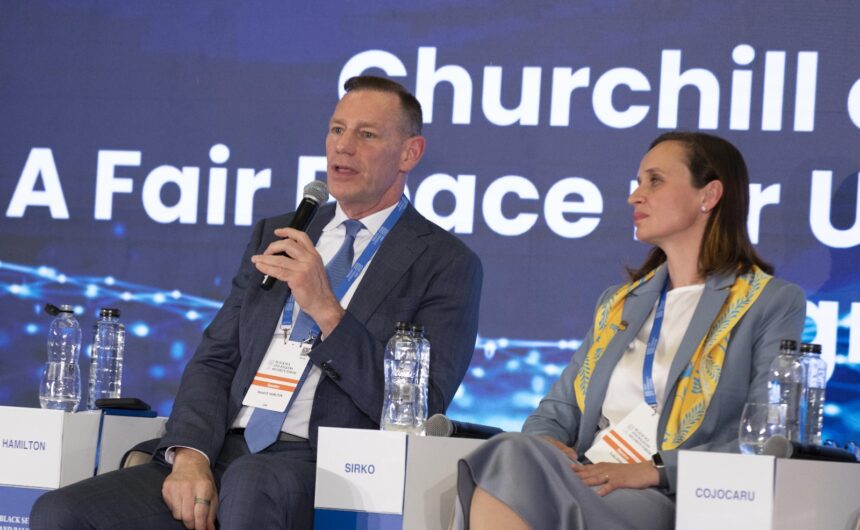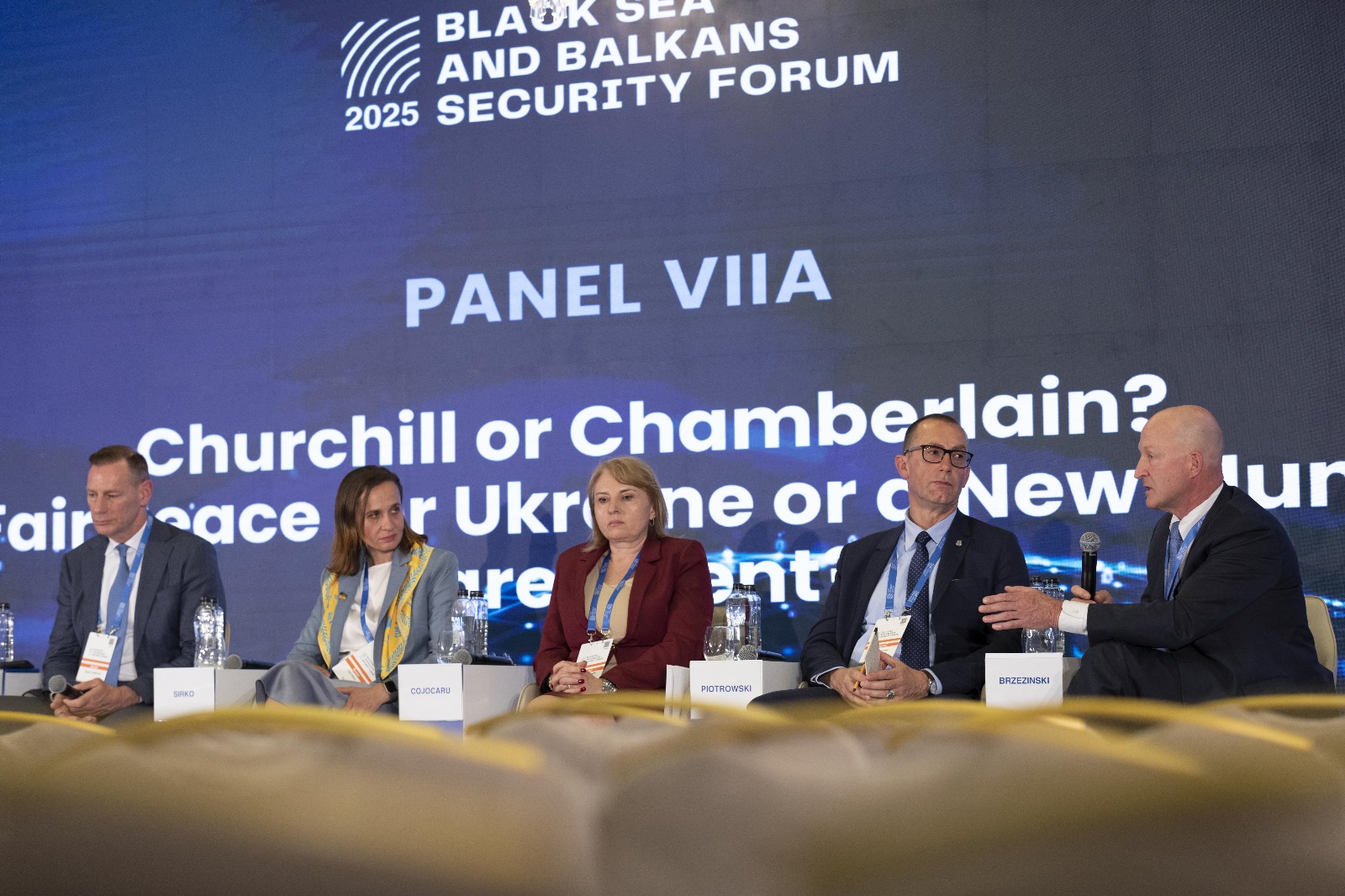
The panel was moderated by Robert E. HAMILTON, Head of Eurasia Research at the Foreign Policy Research Institute, US Army War College, USA, and brought together distinguished speakers such as Yulia SIRKO, First Deputy Head of the Transport and Infrastructure Committee in the Verkhovna Rada of Ukraine, Simona COJOCARU, Director for Defence Policy at the Romanian Ministry of National Defence, Lieutenant General (Ret.) Tomasz PIOTROWSKI, former Operational Commander of the Polish Armed Forces, and Ian BRZEZINSKI, Senior Fellow at the Scowcroft Center for Strategy and Security – Transatlantic Security Initiative, Atlantic Council, USA.
The discussion reflected deep concern regarding the direction of U.S. foreign policy on the conflict in Ukraine, especially in the context of a potential new Trump administration. The speakers emphasized the lack of a coherent and decisive Western strategy, criticizing the incremental and hesitant approach taken by the U.S., which initially refused to provide Ukraine with the necessary military support to seize initiative on the battlefield. This behavior, seen as reluctant and conciliatory, was compared to the concessions made to Nazi Germany before the outbreak of World War II, evoking the danger of repeating historical mistakes such as the 1938 Munich Agreement.
Attention was drawn to the risk that under the current Trump administration, the United States might either impose an unjust peace on Ukraine or withdraw entirely from the conflict—both options posing serious threats to European security. In contrast, it was suggested that Europe now finds itself at a decisive juncture, with the economic, military, and moral capacity to take the lead: intensifying sanctions against Russia, providing substantial military aid to Ukraine, and countering Russian internal propaganda.
The central argument was that a united and proactive Europe could not only shift the balance of power in Ukraine’s favor but also persuade the Trump administration to support international efforts, framing them as a chance to prevent a wider war and to claim a historic role as a peacemaker. Ultimately, it was underscored that Ukraine is already doing everything humanly possible, and the real question remains whether the democratic world has the political will to act in the face of brutal aggression—at a defining moment for the international order.
Watch the live sessions on YouTube: https://youtube.com/live/f97O9-df0io?feature=share