

Rebuild Ukraine Forum 2026 / Panel XIa / 23 October 2026
Moderator
Bogdan Berneagă
Senior Associate Expert, New Strategy Center, Romania
Speaker
Adam Eberhardt
Deputy Director, SEW UW, Centre for East European Studies, University of Warsaw, Poland
Speaker
Oksana Savchuk
Member of the Verkhovna Rada of Ukraine representing Ivano-Frankivsk Region
Speaker
Ionel Scrioșteanu
Former Deputy Minister, Ministry of Transport, Romania
Speaker
Florin Spătaru
CEO, Grup Feroviar Român, Romania
Speaker
Iryna Kosse
Senior Research Fellow and Project Coordinator, Institute for Economic Research and Policy Consulting, Ukraine
Speaker
Małgorzata Samojedny
Co-founder, The Opportunity Institute for Foreign Affairs, Poland
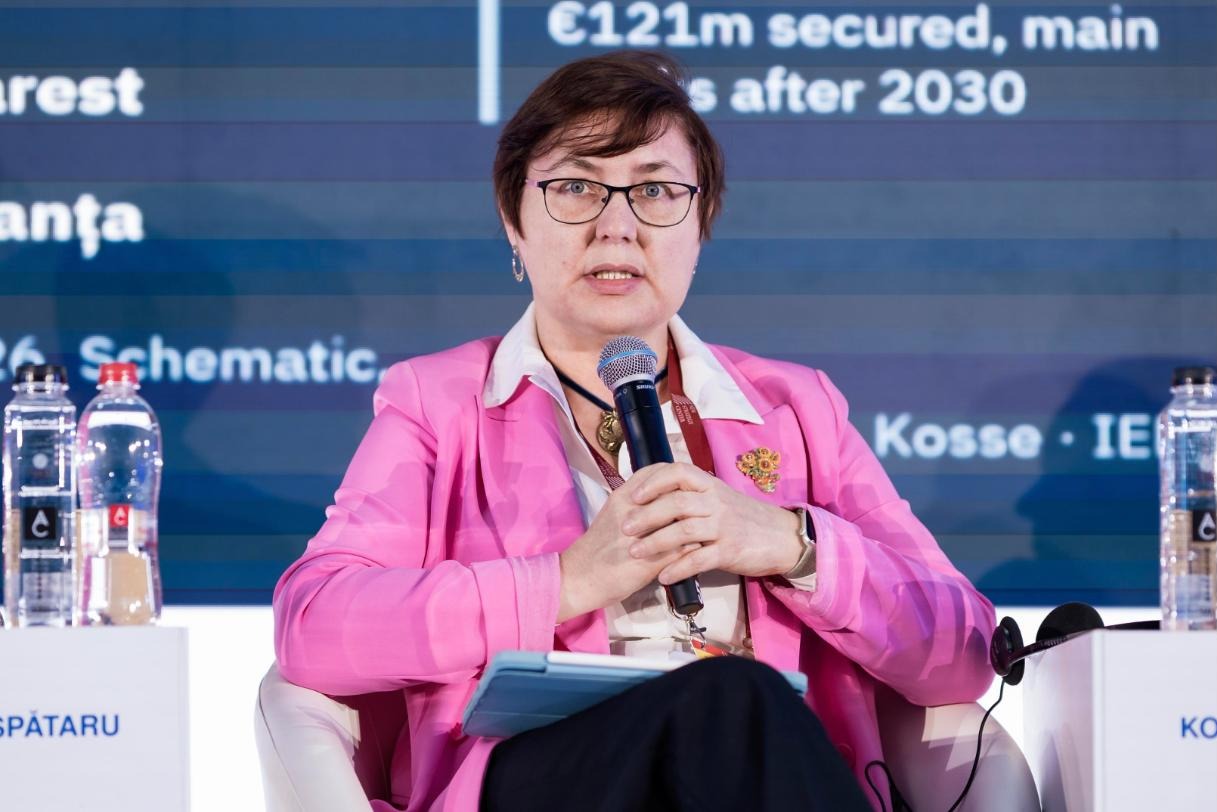
The discussions centered on the strategic importance of Baltic-to-Black Sea connectivity, the formation of a geopolitical triangle between Poland, Ukraine and Romania, railway and road infrastructure development, and military mobility. Oksana Savchuk emphasized that the Baltic-Black Sea route is critical, noting that Ukraine has received its first shipment to extend standard-gauge railways toward Lviv. She highlighted the significance of the Gdansk-Chernivtsi-Constanța corridor, the extension of the European railway gauge toward the Danube and the implementation of single border checkpoints to streamline customs and accelerate EU integration for Ukraine and Moldova.
Addressing the historical and geopolitical landscape, Adam Eberhardt noted that over the past 35 years connectivity prioritized East-West axes, while North-South links, such as the Via Carpathia highway and Poland-Romania connections through Ukraine, received far less attention. He stressed that a strategic Poland-Ukraine-Romania triangle is vital for energy, economic and military security, despite current transit inefficiencies (for example, 10 hours from Warsaw to Lviv), and noted that Poland has already become Ukraine’s second most important trading partner. Complementing this, Małgorzata Samojedny raised a critical infrastructure bottleneck: older roads and bridges in Poland were built for lighter loads than heavy equipment such as Abrams tanks (an issue flagged by Gen. Ben Hodges for years), underscoring the need to integrate military mobility infrastructure into NATO defence spending and adopt the standard European gauge.
Ionel Scrioșteanu pointed out that the most direct route between Constanța and the Polish port of Gdansk runs through Ukraine and must be built to European standards, complementing the Greece-Bulgaria-Romania corridor. He noted ongoing cooperation with Ukrainian authorities on the first European-gauge section from Siret to Chernivtsi to enhance regional resilience. Iryna Kosse added that in July, 90% of Ukraine’s imports arrived via land routes, pointing out that while the route around the Carpathians is cheaper, projects face hurdles due to limited direct EU funding (as the SAFE programme is restricted to member states) and the need for early cross-border access agreements. From a transport operator’s perspective, Florin Spătaru emphasized that transshipment terminals, such as those operated by GFR, require substantial investment and firm governmental commitment to maximize trade volumes, calling for an integrated European strategic transport plan and solutions to the challenges posed by Danube water levels.




Watch the full panel English → Română → Українська →