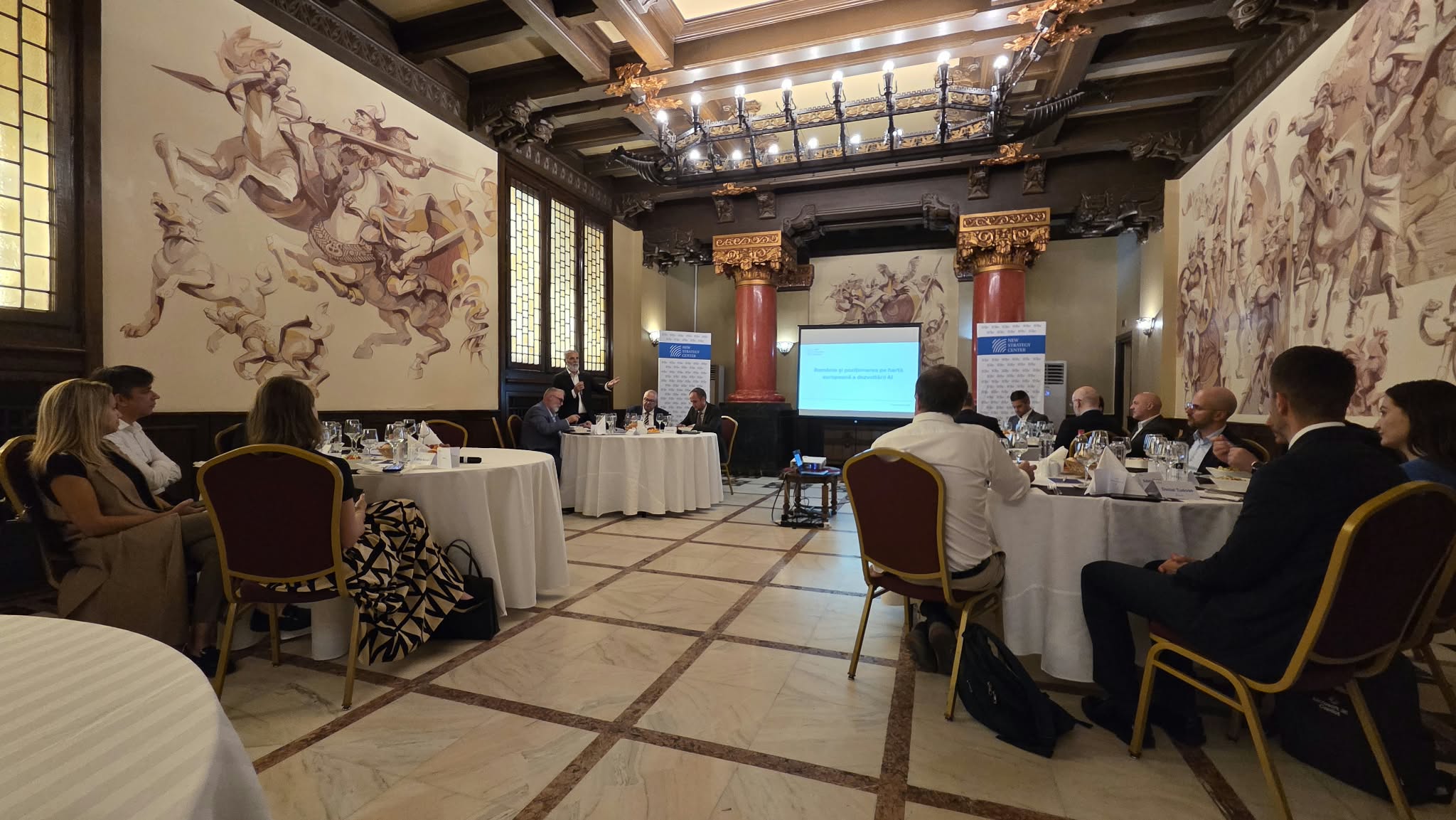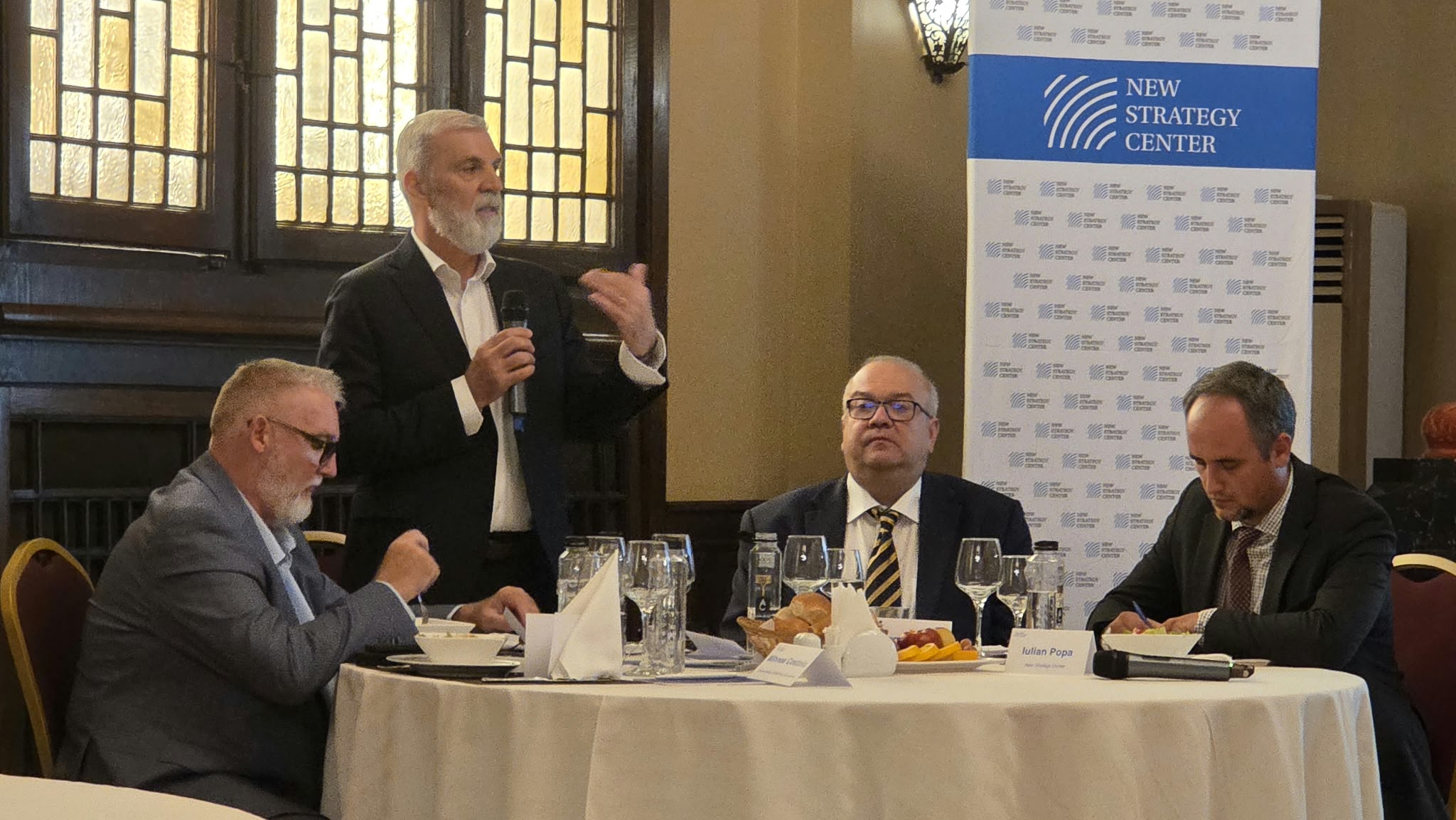
On 21 September, New Strategy Center organized a working dinner entitled “Romania and Its Position on the European AI Development Map,” with Mr. Valeriu Zgonea, President of ANCOM, as the special guest.
The event brought together representatives of public institutions, the business community, and academia for a discussion on Romania’s capacity to turn the opportunities offered by artificial intelligence into concrete projects, products, and capabilities.
The discussions highlighted that artificial intelligence should be approached not only from the perspective of regulation and compliance, but as a structural transformation with direct implications for economic competitiveness, public administration, and national security. For Romania, the key challenge is to move from adopting technology to building an ecosystem capable of developing, testing, and leveraging it.

Among the main topics addressed were the implementation of the AI Act and the need for a predictable and innovation-friendly regulatory framework, the development of a functional AI Sandbox, data governance, the training of specialists, as well as strengthening cooperation between the public sector, the private sector, and universities.
In the field of security and defence, discussions focused on the increasingly important role of dual-use technologies, the need for testing and validation infrastructures, and the importance of closer links between the state’s strategic needs, national industry, and the research community.
Participants also addressed the European and transatlantic dimensions of AI development, including Romania’s integration into infrastructure projects and initiatives aimed at securing technology supply chains. In this context, the need for a national political consensus on AI was highlighted, in order to establish common priorities in terms of investment, infrastructure, education, research, and technological development, beyond political cycles.
The conclusions of the event focused on the need to capitalize on Romania’s existing advantages by turning strategies into concrete projects and strengthening cooperation between the state, industry, and academia. The challenge is not only the adoption of AI, but Romania’s ability to position itself as a relevant actor in the development of AI-based technologies.