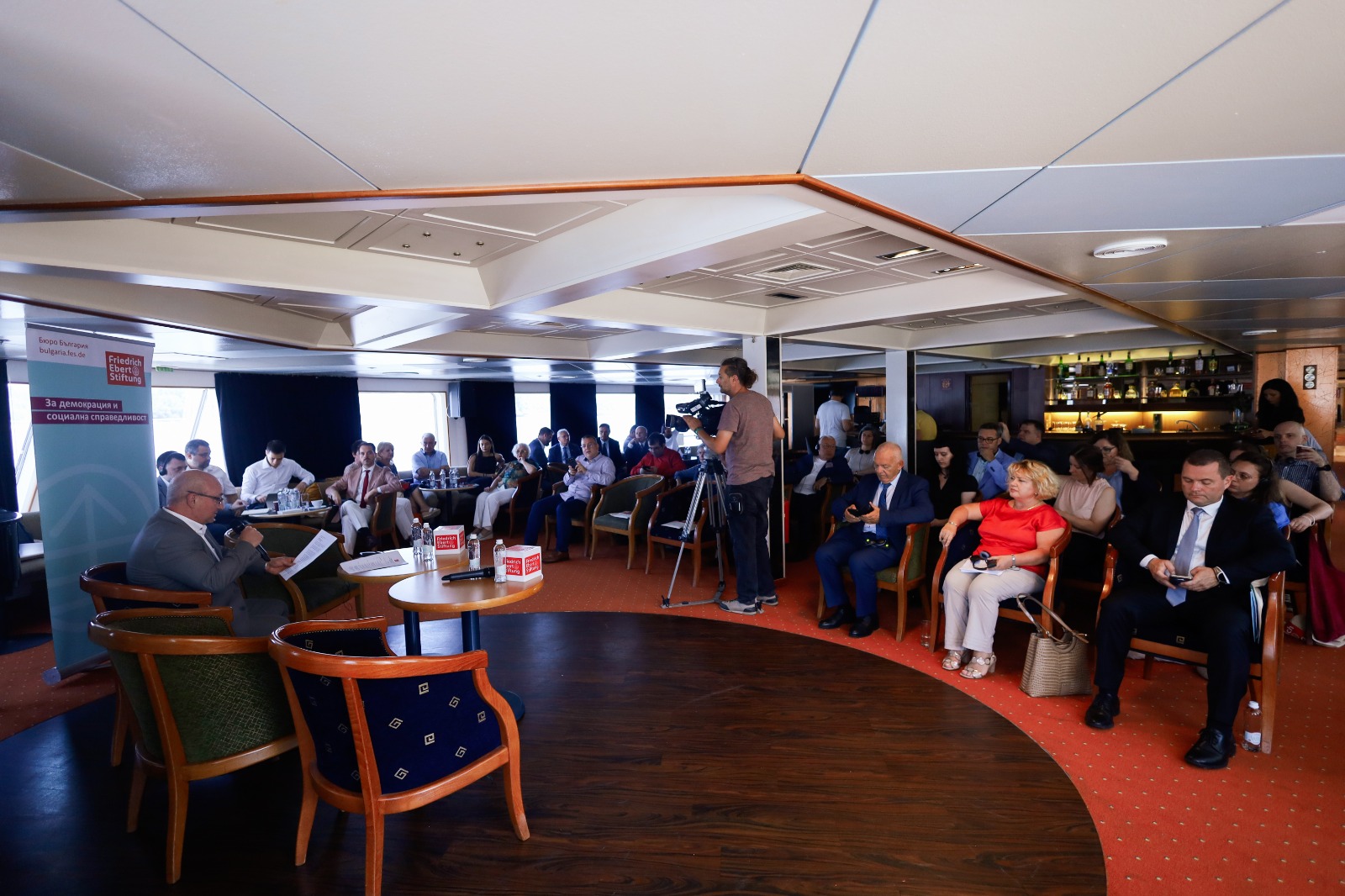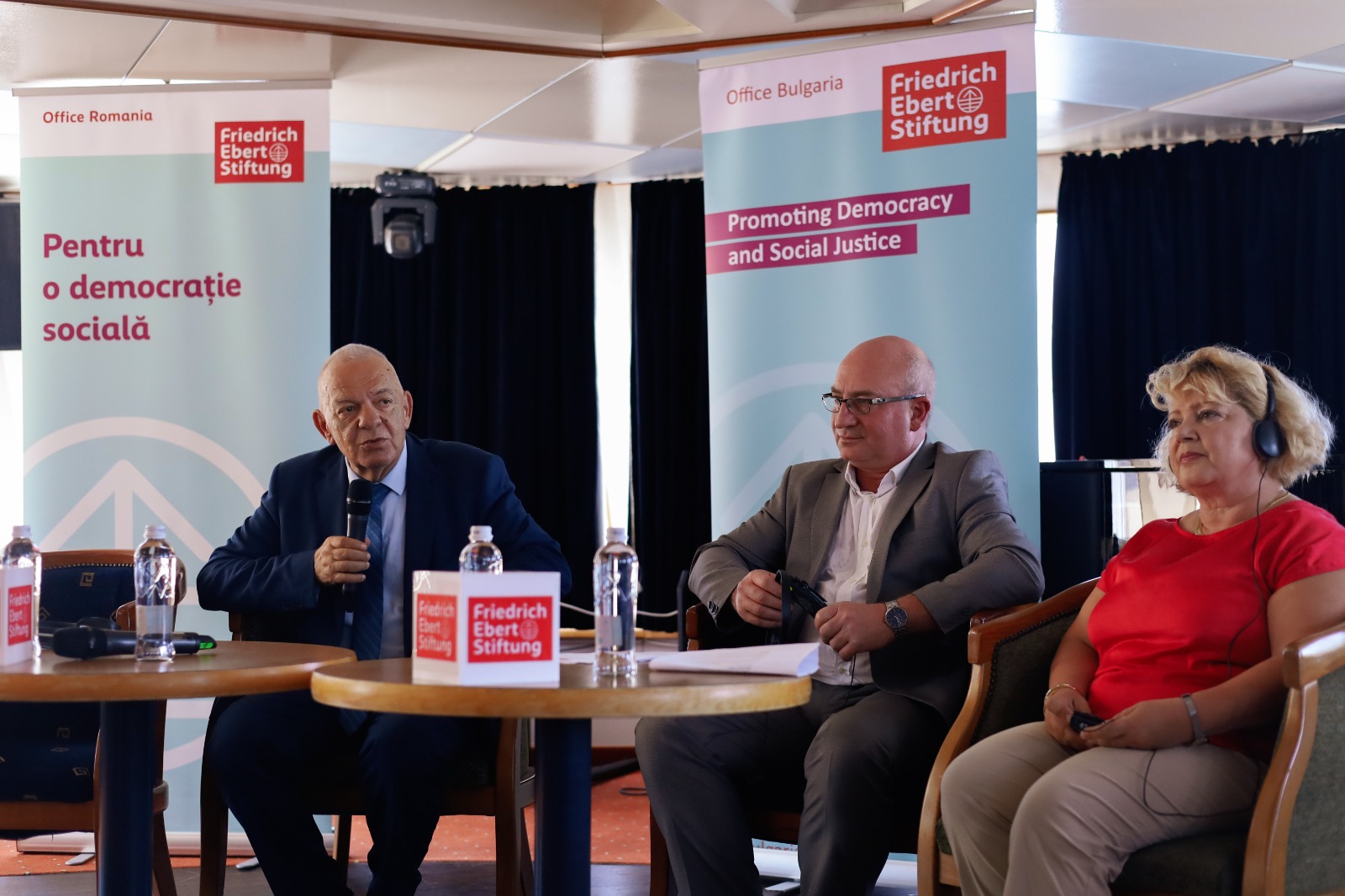
On 29–30 June 2026, the New Strategy Center participated in the conference “A Shared River, A Shared Security: The Lower Danube as a Strategic Theatre for Security, Defence, and Democratic Resilience”, organized by the Friedrich Ebert Stiftung (FES) Romania and Bulgaria in Ruse, Bulgaria. The event brought together policymakers, diplomats, academics, security experts, and representatives of civil society from Romania and Bulgaria to discuss the strategic importance of the Lower Danube region in the context of Russia’s ongoing war against Ukraine, European security, regional cooperation, and democratic resilience. NSC was represented by Dilara Kakillioglu, Head of the Research Department.

The conference provided a platform for dialogue on strengthening political and diplomatic coordination, enhancing military cooperation, and advancing infrastructure connectivity across the Lower Danube. Against the backdrop of the war in Ukraine and the increasingly complex security environment in the Black Sea region, participants exchanged perspectives on regional defence cooperation, strategic coordination, and the role of cross-border initiatives in addressing shared challenges while promoting stability and resilience.
The discussions also highlighted the importance of protecting critical infrastructure, improving military and civilian preparedness, and deepening economic and institutional cooperation across the Lower Danube. Particular attention was given to the EU Strategy for the Danube Region, cross-border cooperation, and the need to strengthen partnerships between Romania and Bulgaria in response to evolving geopolitical risks. The conference concluded that enhanced regional coordination, supported by sustained political commitment and societal engagement, will be essential for ensuring the Lower Danube remains a secure, connected, and resilient strategic area on NATO’s and the European Union’s eastern flank.