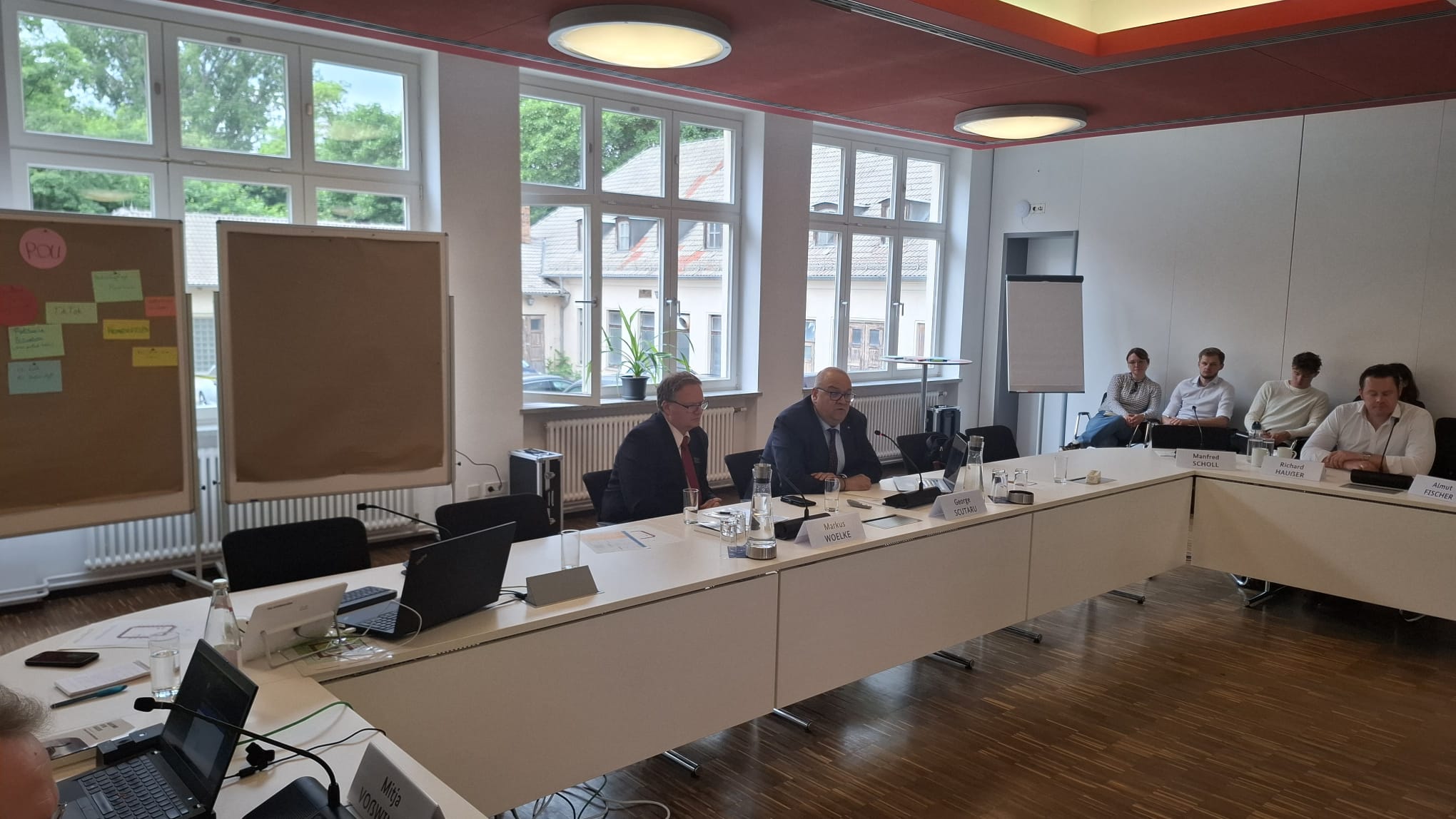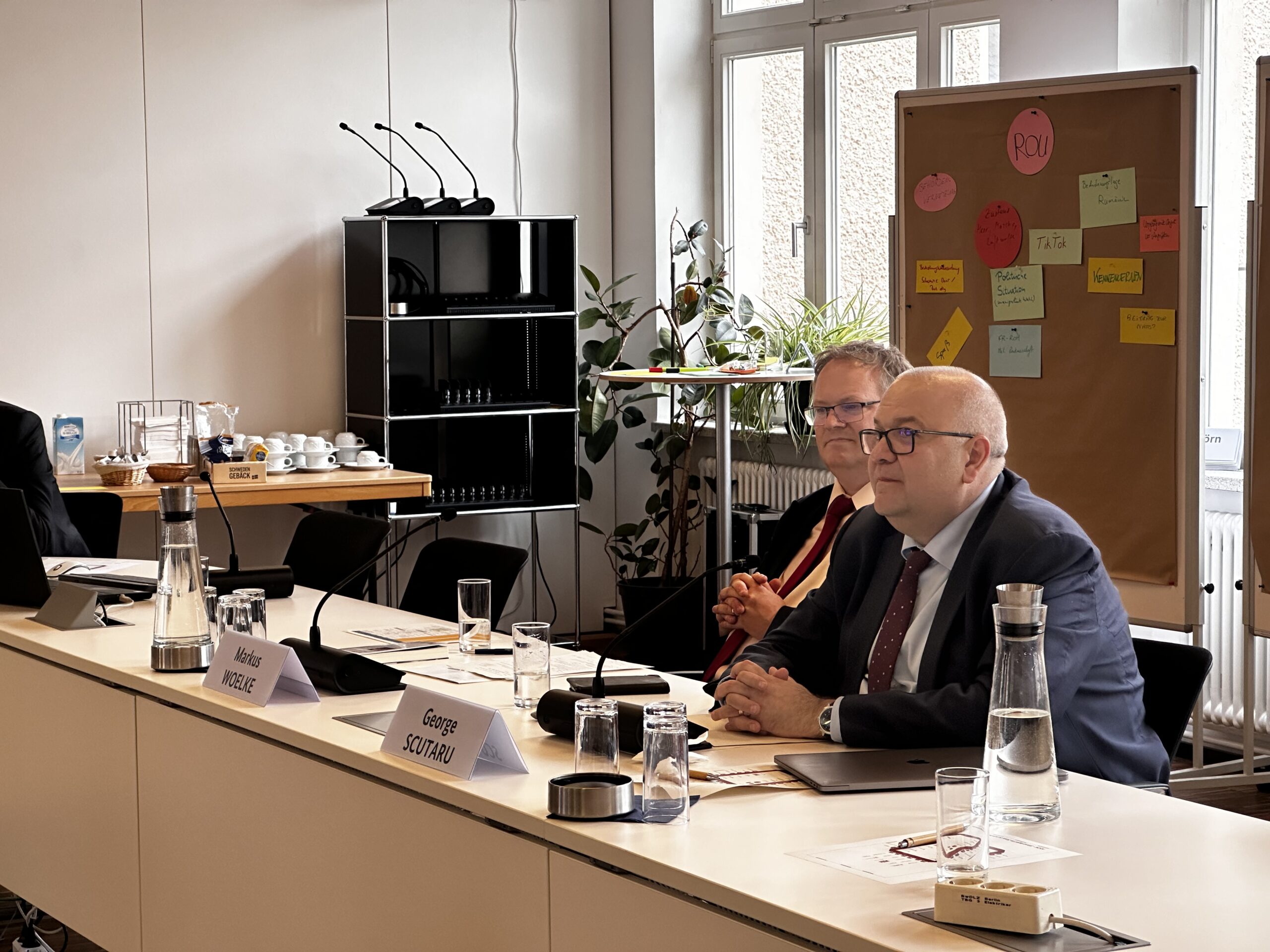
George Scutaru, CEO of the New Strategy Center, was invited by the Federal Academy for Security Policy in Berlin to deliver a briefing on the security situation in the Black Sea region and its strategic importance. The institution organizes annual study visits to various NATO or partner countries for groups of representatives of German institutions; this year, the countries included in the programme are Sweden, Lithuania and Romania.
George Scutaru presented the connectivity and energy projects in the Black Sea, their impact on the security of the region and of the European Union, as well as the importance of the Black Sea states for ensuring global food security.
He also presented several scenarios regarding the evolution of the war in Ukraine. He underlined that the absence of genuine security guarantees for Ukraine, or a mere document similar to the 1994 Budapest Memorandum, would only encourage Russia to attack Ukraine again. The conquest of Ukraine’s entire coastline remains a strategic objective for Russia, which would severely destabilize the security situation in the Black Sea and create a major risk for Moldova’s independence.
Europe needs a stable Ukraine, integrated into the EU, with a strong armed force capable of deterring Russia and firmly supported by European states.
EU countries must view Ukraine as a partner able to provide extensive knowledge about Russia’s kinetic and hybrid patterns of action, as well as about technological innovation.
George Scutaru also presented Russia’s modus operandi in the Black Sea aimed at undermining freedom of navigation, including particularly intense electronic warfare and naval mines. The latest serious incident, on 29 May, when a Russian Geran-2 drone exploded in Galați, injuring two Romanian citizens, is a signal that Russia will continue to escalate in order to test not only Romania’s response, but also NATO’s.
Romania needs support from its allies, and Germany is an important ally, particularly when it comes to deploying ISR capabilities to better monitor drones, as well as counter-drone capabilities. This is all the more important as, through the SAFE programme, Romania will develop strong military-industrial cooperation with Germany.
During his visit to Berlin, George Scutaru is also scheduled to hold meetings and discussions on the security situation in the Black Sea with several think tanks, experts from the German Parliament and representatives of the Federal Foreign Office.
The visit is part of NSC’s ongoing efforts to promote the strategic relevance of the Black Sea and Romania’s role, especially in the current difficult context created by Russia’s invasion of Ukraine.