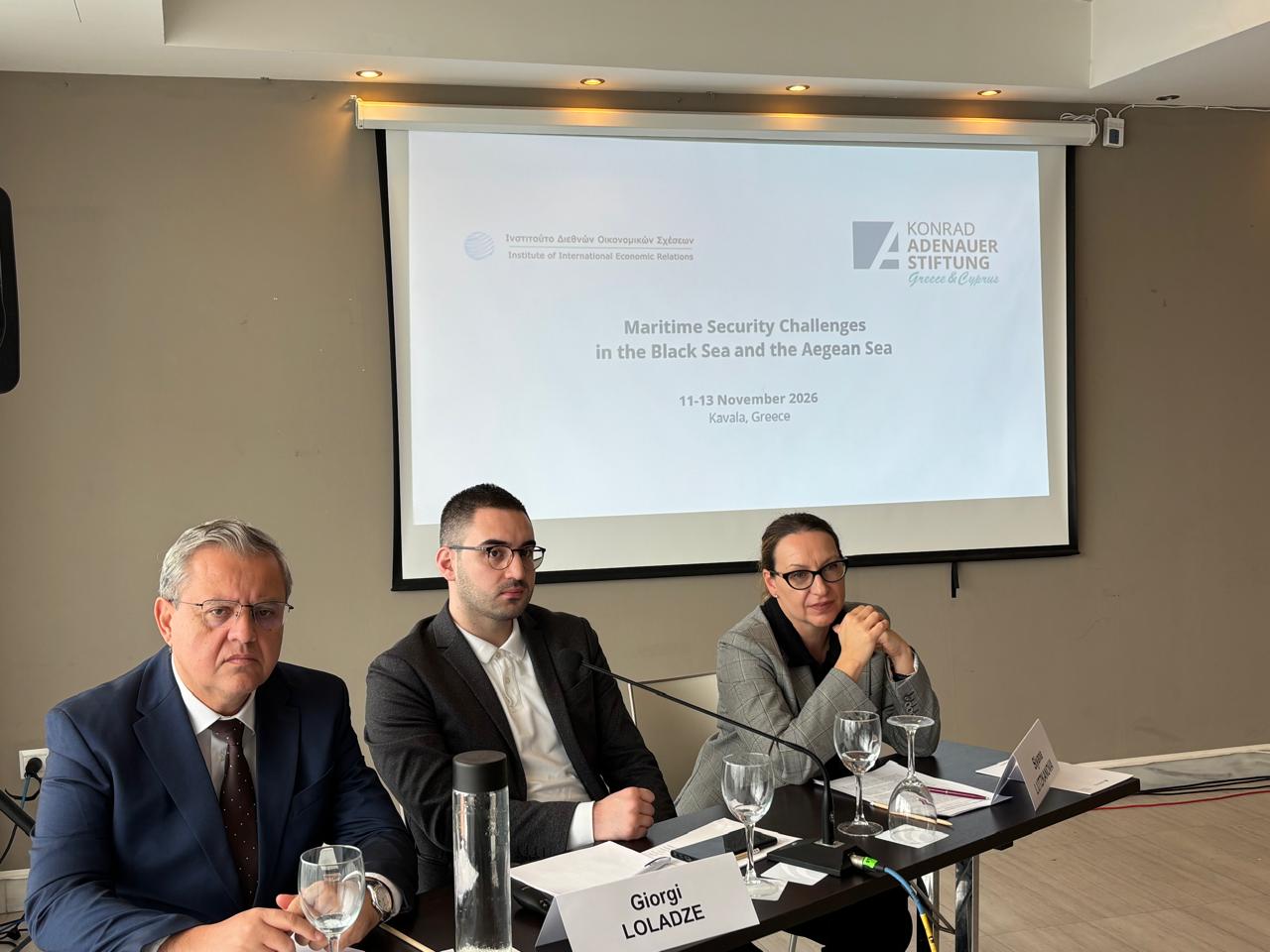
New Strategy Center participated, on 12–13 November, in the workshop “Maritime Security Challenges in the Black Sea and the Aegean Sea”, organized by the Konrad Adenauer Stiftung and the Institute of Economic Relations in Kavala, Greece.
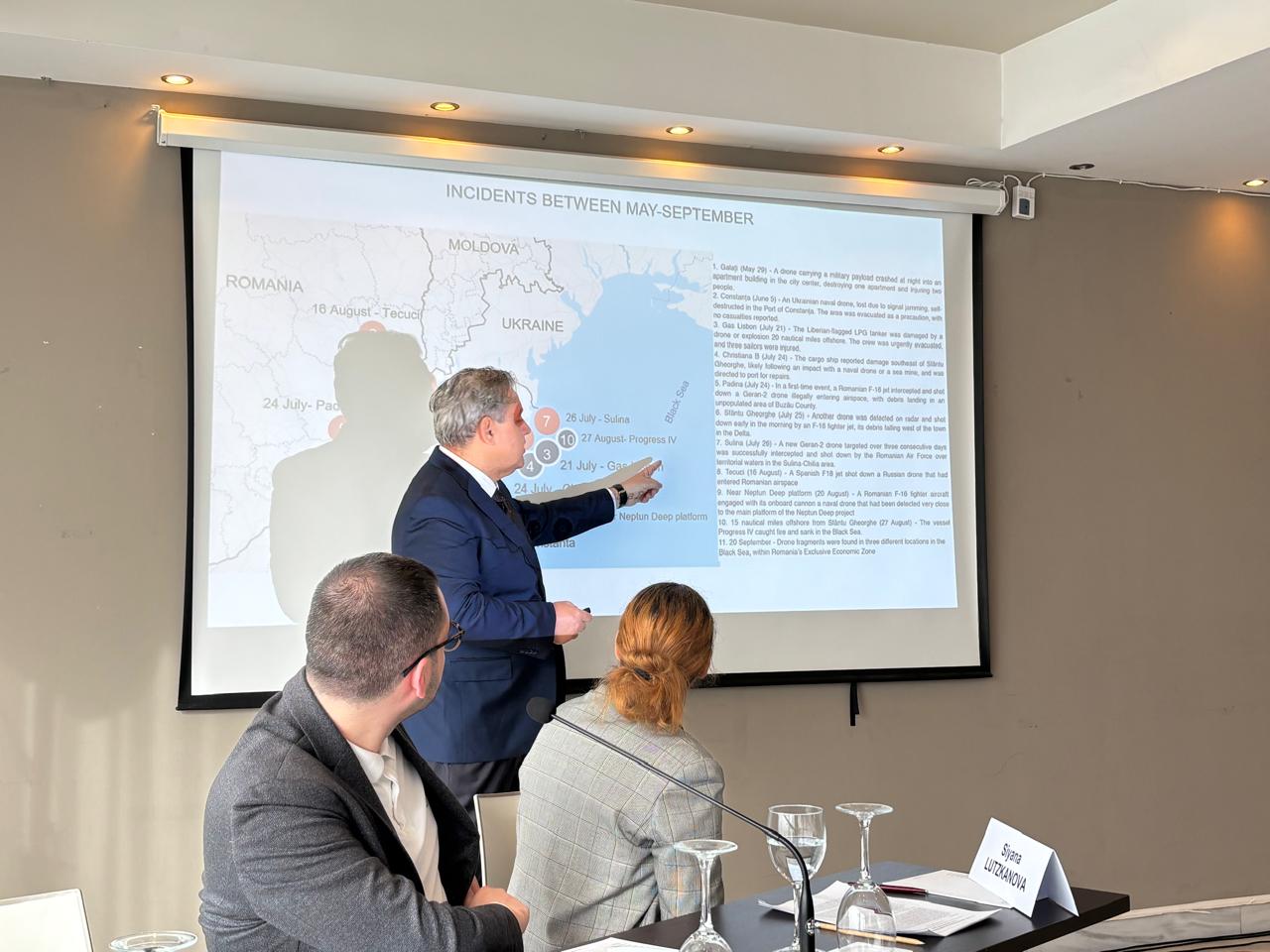
During the panel “Emerging Security Challenges for Ports and Maritime Navigation”, Rear Admiral (Ret.) Liviu Coman, Senior Associate Expert at New Strategy Center, presented an analysis of the deteriorating maritime security situation in the Black Sea and its implications for Romania and NATO’s southeastern flank.
His presentation highlighted the escalating threats to freedom of navigation, ports, and critical infrastructure posed by aerial and maritime drone attacks, as well as the use of electronic warfare. Particular attention was paid to vulnerabilities in the Sulina area and along the Danube corridor, where the concentration of commercial traffic and the proximity of Ukrainian ports complicate the protection of vessels. The presentation emphasized the potential consequences of a blockade of the Sulina Channel for Ukrainian exports and Romanian economic interests, as well as the need to protect offshore energy infrastructure, particularly the Neptun Deep project.
The analysis underscored the need to adapt the Allied response by strengthening intelligence, surveillance, and reconnaissance (ISR) capabilities, developing counter-drone defenses, and establishing a NATO maritime mission in the western Black Sea — Neptun Deep Sentry — inspired by the Baltic Sentry model. Additionally, should attacks continue, the presentation proposed considering the establishment of a defensive no-fly zone over Ukrainian Danube ports, based on appropriate legal and operational arrangements. The central message was that freedom of navigation and the security of critical infrastructure require a sustained Allied presence, credible response capabilities, and enhanced regional coordination.
Throughout the conference, discussions highlighted the interdependence between maritime security, critical infrastructure protection, and regional connectivity. Participants emphasized that, in the Black Sea, war-related threats have a far greater impact than climate-related factors, while the region’s specific characteristics require avoiding the automatic application of risk assessment models developed for the Central and Western Mediterranean. The analysis of the conflict’s economic implications highlighted disruptions to trade flows, rising transport and insurance costs, and the importance of Romanian Danube ports and the Port of Constanța for Ukrainian exports and regional resilience.
On the second day, discussions shifted to the Middle Corridor, as an alternative route connecting Central Asia to Europe while bypassing Russia, as well as its structural limitations, including insufficient integration between transport modes and capacity constraints at Georgian ports. Participants highlighted the geopolitical risks associated with the development of the Port of Anaklia, particularly due to its proximity to the Port of Ochamchire and the prospect of its military use by Russia, as well as the strategic relevance of the Georgia–Romania digital cable.
The discussions advocated a realistic approach to infrastructure planning, financing, and expected outcomes, with particular emphasis on connections to the Aegean Sea, the role of the Danube, and the future development of the Black Sea–Baltic Sea corridor.