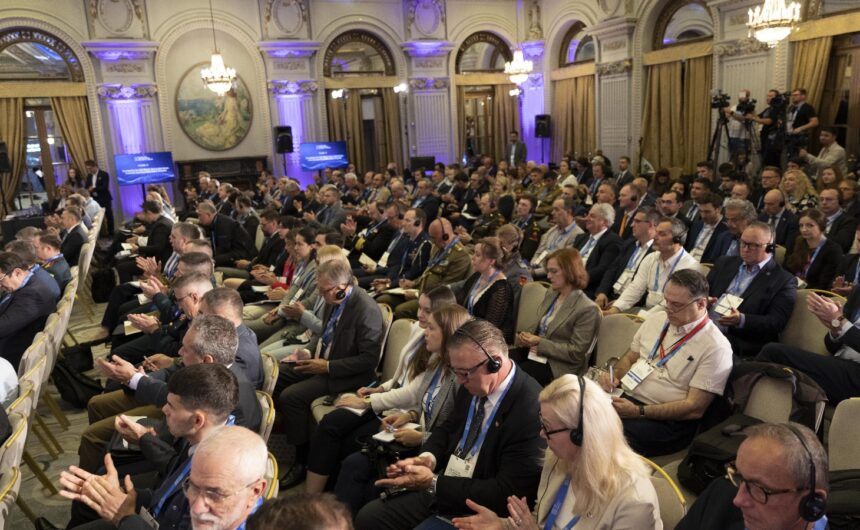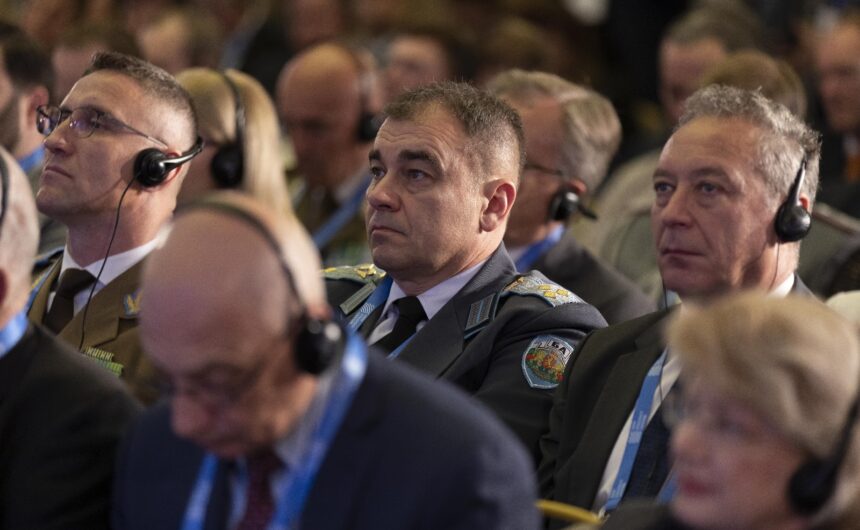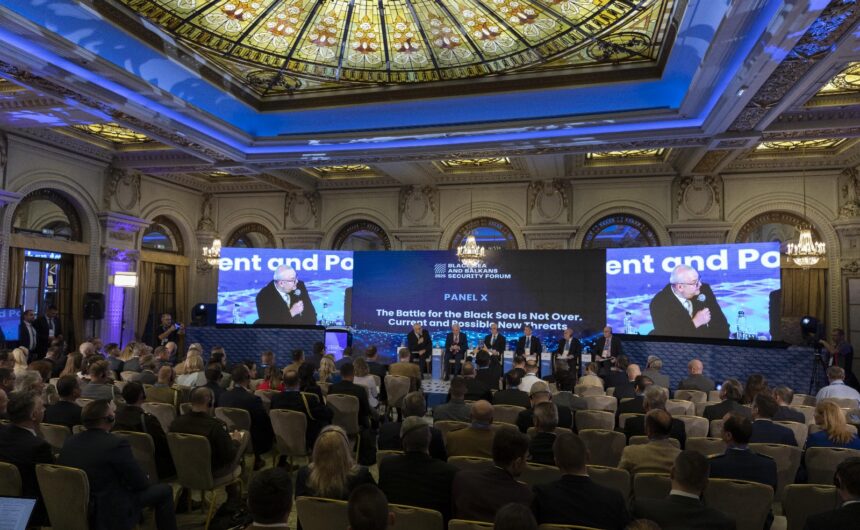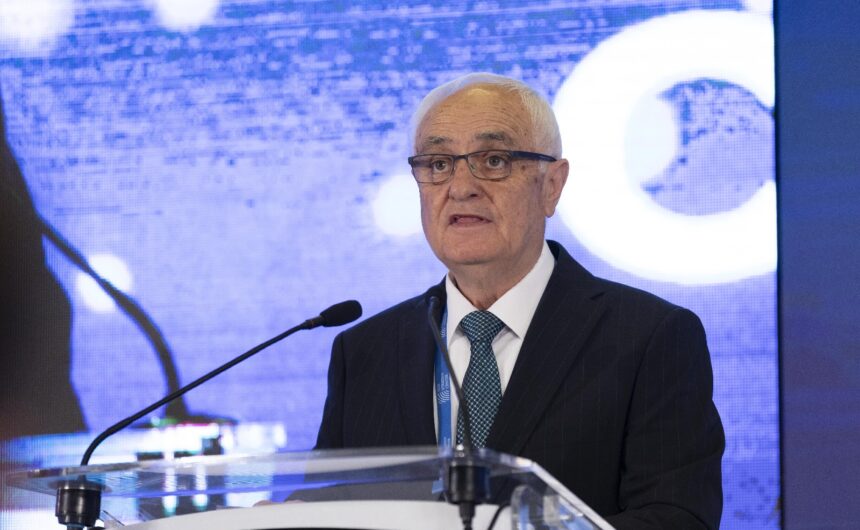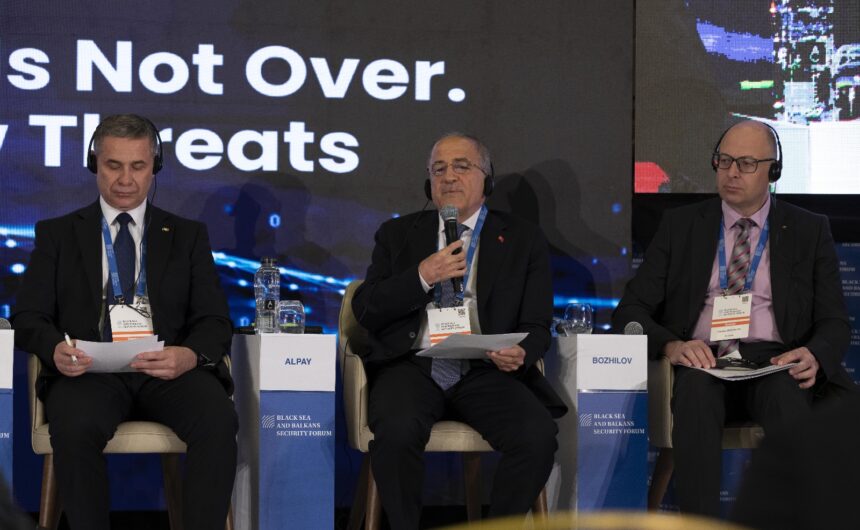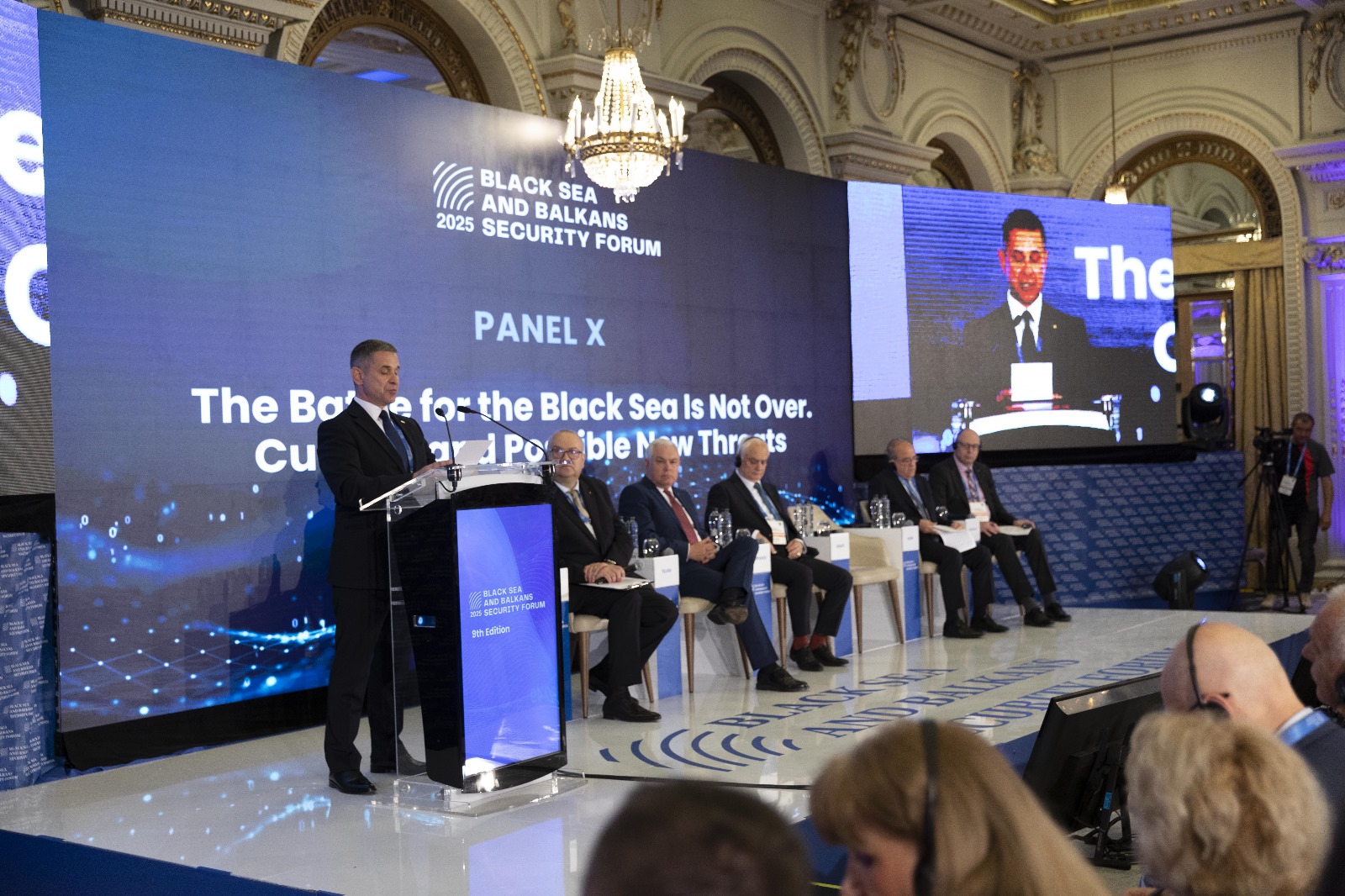
The panel was moderated by George SCUTARU, CEO of the New Strategy Center in Romania, and Yordan BOZHILOV, President of the Sofia Security Forum in Bulgaria, bringing together prominent political figures in the field of defence, such as: H.E. Angel TÎLVĂR, Minister of National Defence of Romania; H.E. Atanas ZAPRYANOV, Minister of Defence of Bulgaria; H.E. Anatolie NOSATÎI, Minister of Defence of the Republic of Moldova; and H.E. Şuay ALPAY, Deputy Minister of Defence of Türkiye.
The discussions focused on the security challenges in the Black Sea region and its significance for the European security architecture. In this context, the speakers emphasised the contributions of Black Sea littoral states to ensuring a higher level of security. In Romania’s case, attention was drawn to its participation in the European armament program, the SAFE defence funding initiative, and a series of joint military exercises with allied forces. Regarding Bulgaria, the focus was placed on cooperation with Romania and Türkiye for the demining of the Black Sea, as well as the importance of military mobility and the protection of critical infrastructure. For the Republic of Moldova, the main security threats are closely linked to the war in Ukraine and the Russian Federation’s hybrid actions targeting the country’s democratic order, European path, and internal stability. Lastly, Türkiye’s position views the Black Sea as an important maritime trade corridor for both littoral and non-littoral states and a significant reservoir of critical natural resources. Furthermore, it was noted how Ankara applies the Montreux Convention, NATO or EU policies concerning Black Sea security, and its role in peace negotiations regarding the conflict in Ukraine.
Watch the live sessions on YouTube: https://youtube.com/live/ycg6lVfjU10?feature=share